Jurisdiction, the legal concept of authority, plays a crucial role in determining the power of courts in various legal systems. From territorial to personal and subject matter jurisdiction, each type holds significance in legal proceedings.
As we delve into the intricacies of jurisdiction, we unravel the complexities that arise when multiple courts claim authority, the challenges faced in determining jurisdiction, and the evolving landscape of jurisdiction in a globalized world.





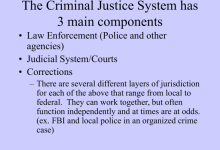
Introduction to Jurisdiction
In legal terms, jurisdiction refers to the authority of a court to hear and decide a case. It determines the scope and limits of a court’s power to exercise its authority over individuals, property, or subject matter.
Jurisdiction is a fundamental concept in various legal systems as it ensures that cases are heard by the appropriate court, guaranteeing fairness and justice in legal proceedings. Without proper jurisdiction, court decisions may be invalid or unenforceable.
Types of Jurisdiction
- Personal Jurisdiction: This type of jurisdiction pertains to a court’s authority over the parties involved in a case, ensuring that they have a significant connection to the jurisdiction where the court is located.
- Subject Matter Jurisdiction: Subject matter jurisdiction refers to a court’s authority to hear a particular type of case, such as civil, criminal, or family law matters.
- Territorial Jurisdiction: Territorial jurisdiction determines the geographic area over which a court has authority, ensuring that cases are heard within the appropriate boundaries.
Territorial Jurisdiction
Territorial jurisdiction refers to the authority of a court to hear a case based on where the events took place or where the parties involved are located. Different countries have varying rules and principles to determine territorial jurisdiction.
In the United States, for example, territorial jurisdiction is typically determined based on where the defendant resides, where the injury occurred, or where the contract was signed. This helps ensure that cases are heard in a court that has a connection to the dispute.
Challenges to territorial jurisdiction can arise when parties dispute the location where the events occurred or where they are based. In such cases, courts may need to determine the most appropriate jurisdiction based on the facts presented.
Challenges in Territorial Jurisdiction
- One common challenge is when a defendant argues that the court does not have jurisdiction over them because they are not located within the court’s territory.
- Another challenge may arise when events occur in multiple locations, leading to a dispute over which court has jurisdiction over the case.
- Jurisdictional challenges can also occur in international cases, where parties from different countries are involved, raising questions about which court has the authority to hear the dispute.
Personal Jurisdiction
Personal jurisdiction refers to a court’s authority to make decisions and judgments regarding individuals or entities involved in a legal case. It is a crucial aspect of the legal system as it determines whether a court has the power to hear a case and enforce its decisions on the parties involved.
Establishing Personal Jurisdiction
In order to establish personal jurisdiction over an individual or entity, certain criteria must be met. This typically involves demonstrating that the person or entity has sufficient contacts with the state or country where the court is located. These contacts can include physical presence, business operations, or other connections that indicate a relationship with the jurisdiction.
- Physical Presence: One common way to establish personal jurisdiction is by showing that the individual is physically present within the geographic boundaries of the court’s jurisdiction.
- Business Operations: If an entity conducts business within a particular jurisdiction, it may be subject to personal jurisdiction in that area.
- Consent: Parties can also agree to submit to the jurisdiction of a specific court through contracts or other legal agreements.
Comparison in Civil and Criminal Cases
Personal jurisdiction plays a slightly different role in civil and criminal cases. In civil cases, the focus is on ensuring that the court has the authority to hear the dispute and render a judgment that is legally binding on the parties involved. On the other hand, in criminal cases, personal jurisdiction is crucial for establishing that the court has the power to prosecute and impose penalties on individuals accused of committing crimes within its jurisdiction.
- In civil cases, personal jurisdiction is often based on the defendant’s contacts with the jurisdiction, while criminal cases may involve jurisdictional issues related to where the crime was committed and the defendant’s connection to that location.
- The rules and standards for establishing personal jurisdiction can vary between civil and criminal cases, depending on the legal principles and statutes governing each type of case.
Subject Matter Jurisdiction
Subject matter jurisdiction refers to the authority of a court to hear and decide on a particular type of legal dispute or case. It is essential in legal proceedings as it determines whether a court has the power to adjudicate a specific matter.
Variation in Different Courts
Subject matter jurisdiction can vary between different courts, such as federal and state courts. Federal courts have limited subject matter jurisdiction, meaning they can only hear cases involving federal law, disputes between states, or cases with parties from different states (diversity jurisdiction). On the other hand, state courts have broader subject matter jurisdiction and can hear a wider range of cases, including those involving state law or disputes between residents of the same state.
Contested Cases
Subject matter jurisdiction can be contested in cases where the court’s authority to hear a particular type of case is challenged. For example, if a case involves a federal question but is filed in state court, the defendant may argue that the state court lacks subject matter jurisdiction. Similarly, in cases of diversity jurisdiction, the parties involved may dispute whether the amount in controversy meets the jurisdictional threshold required for the federal court to hear the case.
Concurrent Jurisdiction
Concurrent jurisdiction refers to a situation in which multiple courts have the authority to hear a case. This means that more than one court has the power to make a legal decision on the same matter.
Implications of Concurrent Jurisdiction
When multiple courts have concurrent jurisdiction, it can lead to potential forum shopping, where parties choose the court they believe will be most favorable to their case. This can result in conflicting decisions and inefficiencies in the legal system.
Management of Concurrent Jurisdiction
In order to manage concurrent jurisdiction, courts may use mechanisms such as abstention doctrines, removal procedures, or coordination between courts to ensure that cases are handled appropriately and efficiently. Judges may also communicate with each other to determine the best course of action.
Challenges and Benefits of Concurrent Jurisdiction
- Challenges:
1. Conflicting decisions can arise if different courts reach opposite conclusions on the same legal issue.
2. Forum shopping can lead to delays and increased costs for all parties involved.
- Benefits:
1. Allows parties to choose a court that is most convenient or favorable for their case.
2. Provides a level of flexibility in the legal system to accommodate different needs and circumstances.
Exclusive Jurisdiction
Exclusive jurisdiction refers to the authority of a specific court to hear and decide on certain types of legal cases to the exclusion of all other courts. This means that only the designated court has the power to adjudicate on matters falling within its exclusive jurisdiction.
Application in Specific Legal Matters
In certain legal matters, exclusive jurisdiction is granted to specialized courts or tribunals based on their expertise or the nature of the dispute. For example, cases involving patents, trademarks, and copyrights are often under the exclusive jurisdiction of intellectual property courts. Similarly, family law disputes such as divorce and child custody may be exclusively heard by family courts.
Examples of Cases Where Exclusive Jurisdiction Applies
– Federal courts in the United States have exclusive jurisdiction over cases involving federal laws, bankruptcy, and maritime disputes.
– The International Court of Justice has exclusive jurisdiction to hear cases between states based on international law.
– The European Court of Human Rights has exclusive jurisdiction to rule on alleged violations of the European Convention on Human Rights.
Rationale Behind Granting Exclusive Jurisdiction
Granting exclusive jurisdiction to certain courts helps ensure consistency and expertise in the resolution of specific legal matters. Specialized courts with exclusive jurisdiction can develop a deep understanding of the complexities involved in particular areas of law, leading to more efficient and effective adjudication. It also prevents forum shopping, where parties try to choose a court that may be more favorable to their case, thereby promoting fairness and predictability in the legal system.
International Jurisdiction
International jurisdiction refers to the authority of a country or legal system to apply its laws and regulations to individuals, businesses, or other entities located outside its borders. This concept becomes crucial in cross-border legal cases where parties from different countries are involved, leading to complexities in determining which jurisdiction has the right to preside over the matter.
Determination of International Jurisdiction
In cross-border legal cases, the determination of international jurisdiction can be challenging due to conflicting laws and regulations from different countries. The primary factors considered include the location of the parties involved, the subject matter of the dispute, and the connections to each jurisdiction. Courts may apply various tests to establish jurisdiction, such as the minimum contacts test or the effects doctrine, to decide which legal system should handle the case.
- International jurisdiction is often determined based on the principles of territoriality, nationality, and universality.
- Courts may also consider the convenience of the parties, the interests of justice, and any applicable treaties or agreements between countries.
- Complex cases involving multiple jurisdictions may require the application of comity, which is the principle of respecting the laws and judicial decisions of other countries.
Challenges in Jurisdiction
When it comes to determining jurisdiction, there are several common challenges that legal professionals face. These challenges can complicate the process and lead to complex legal issues that need to be carefully navigated.
Role of Technology in Complicating Jurisdictional Issues
With the advancement of technology, determining jurisdiction has become more complex. The borderless nature of the internet and the ability to conduct business globally online have blurred traditional jurisdictional lines. This raises questions about which laws apply and which courts have authority in cases involving online transactions, cybercrimes, or disputes over digital assets.
Recent Legal Cases Highlighting Challenges in Jurisdiction
- In the case of Amazon.com, Inc. v. Commissioner of Internal Revenue, the issue of whether a state can tax a business that does not have a physical presence within its borders was brought to light. This case underscored the challenge of determining tax jurisdiction in an increasingly digital economy.
- Another example is the ongoing debate over the extraterritorial reach of data privacy laws, as seen in cases like Microsoft Corp. v. United States. This case raised questions about whether U.S. law enforcement can compel a company to turn over data stored on servers located outside the country.
- The rise of cryptocurrency has also presented jurisdictional challenges, with cases like SEC v. Telegram Group Inc. highlighting the difficulties in regulating digital assets that transcend national borders.
Future of Jurisdiction
The future of jurisdiction is poised to undergo significant changes in response to the increasing pace of globalization. As the world becomes more interconnected, legal systems will need to adapt to address cross-border disputes and conflicts. In order to effectively navigate this evolving landscape, potential reforms are needed to streamline jurisdictional processes and ensure efficient resolution of legal matters. Additionally, the impact of emerging technologies such as artificial intelligence and blockchain will play a crucial role in shaping the future of jurisdiction.
Impact of Globalization
Globalization has led to a rise in transnational activities, making it challenging to determine which jurisdiction has authority over a particular case. As a result, there is a growing need for international cooperation and harmonization of laws to address jurisdictional issues that span multiple countries. The concept of universal jurisdiction may become more prevalent in the future, allowing courts to prosecute individuals for crimes committed anywhere in the world.
Reforms in Jurisdiction
In order to effectively address jurisdictional challenges in the future, reforms must be implemented to enhance clarity and consistency in legal proceedings. One potential reform could involve the establishment of specialized international courts to handle complex cross-border disputes. Additionally, the development of uniform rules for determining jurisdiction across different legal systems could help streamline the resolution of international cases.
Impact of Emerging Technologies
The rise of emerging technologies is expected to revolutionize the legal landscape and have a profound impact on jurisdiction. For example, blockchain technology has the potential to create secure and transparent systems for recording legal transactions, reducing the need for traditional jurisdictional oversight. Artificial intelligence may also play a role in automating certain legal processes, leading to more efficient and cost-effective resolution of disputes.
Final Summary
In conclusion, jurisdiction stands as a cornerstone of legal systems, shaping the course of legal disputes and ensuring fair and efficient resolution. As we anticipate the future of jurisdiction amidst technological advancements and globalization, the need for reforms becomes increasingly apparent to address the challenges that lie ahead.

Content specialist focused on providing clear, accurate, and engaging information for our readers.